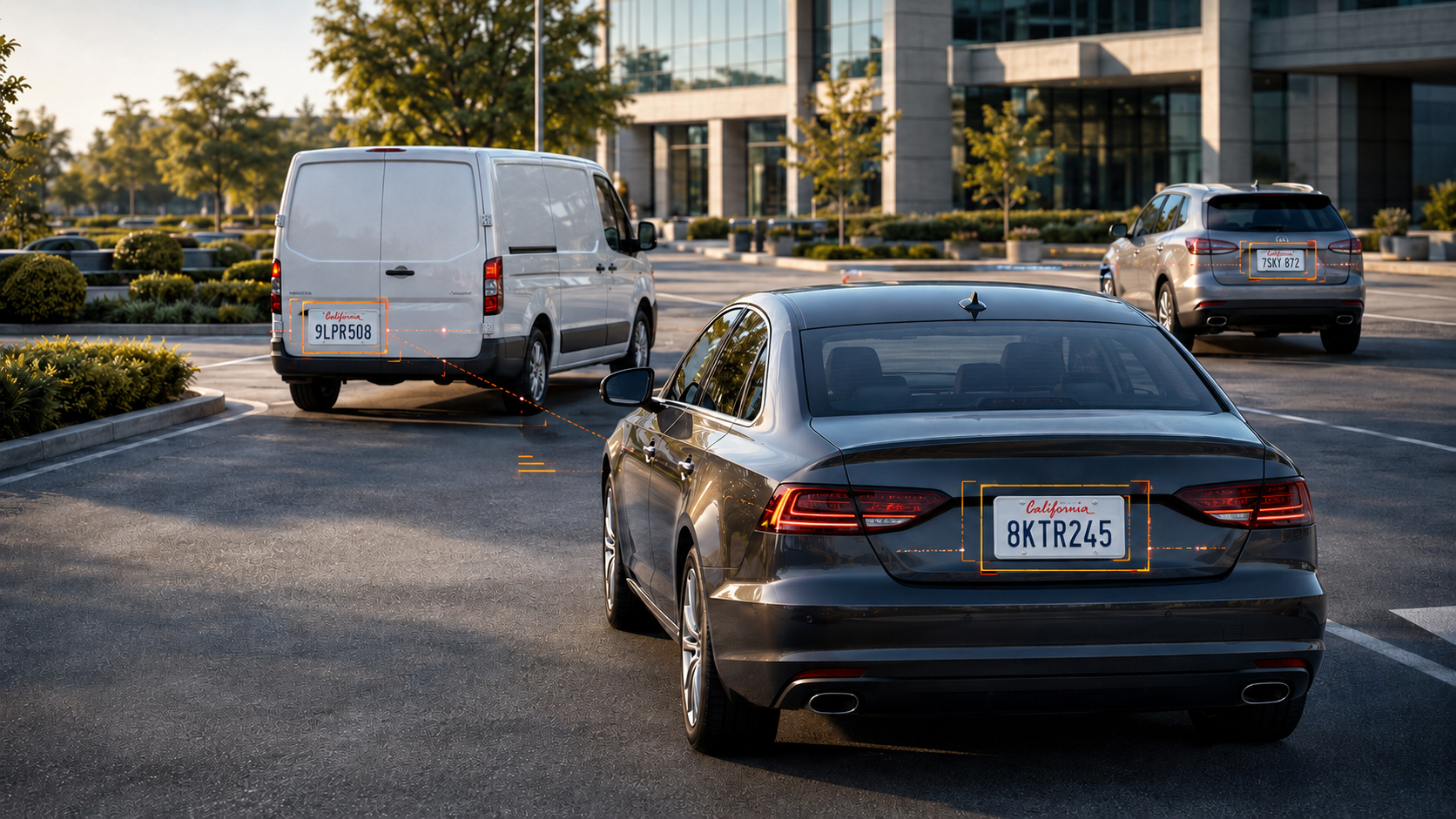



Can your business benefit from capturing license plate data? |
Every day, vehicles enter and exit commercial properties, campuses, residential communities and critical infrastructure sites. At busy facilities, manually tracking those movements is difficult—and reviewing hours of recorded video after an incident can be even more challenging. License Plate Recognition (LPR) technology helps organizations automatically identify, document and search vehicle activity. When deployed correctly, it can transform ordinary video into useful data for security, investigations, access management and operational planning. What Is License Plate Recognition?License Plate Recognition—also called Automatic License Plate Recognition (ALPR) or Automatic Number Plate Recognition (ANPR)—combines specialized cameras with software that can:
A conventional surveillance camera records what happened. An LPR solution goes further by turning vehicle activity into structured, searchable information. How Does LPR Work?The process is typically automatic:
Some advanced solutions can also identify a vehicle’s make, model, color or type, providing additional search criteria when a complete plate number is unavailable. What Are the Benefits of LPR? Faster InvestigationsInstead of reviewing hours of video, security teams can search for a known license plate—or sometimes a partial plate—and quickly locate relevant vehicle events. Improved Situational AwarenessLPR can help organizations identify unauthorized vehicles, recognize repeat visits and monitor vehicles associated with an investigation or security concern. Access and Parking ManagementWhen integrated with access control systems, LPR can support automated gate entry, authorized vehicle lists, parking enforcement and visitor management. More Useful AlertsA system can notify personnel when a vehicle on a watchlist arrives or when an unrecognized vehicle enters a controlled area. This gives security teams an opportunity to respond while the event is occurring. Operational IntelligenceVehicle data can reveal peak arrival periods, traffic patterns, delivery activity and recurring congestion. This information may help an organization improve staffing, traffic flow and facility planning. Where Is LPR Commonly Used?LPR can support many types of organizations:
No. LPR provides the greatest value when vehicle identity matters to security, access or operations. It may be worth considering if your organization:
A facility with little vehicle traffic or no need to identify individual vehicles may receive limited value from a dedicated LPR system. What Makes an LPR Deployment Successful?Results depend on more than selecting a camera with a high resolution. Important factors include:
The best view for reading a plate is not always the best view for general surveillance. In many applications, a dedicated LPR camera should be positioned specifically for the vehicle lane while another camera provides an overview of the surrounding scene. Organizations should also establish clear policies for who may access plate information, how long the data is retained and how it may be used. Applicable privacy and data-protection requirements should be considered before deployment. The Future of Vehicle IntelligenceLPR is evolving beyond simply reading plate characters. Artificial intelligence can increasingly classify vehicles, recognize makes, models and colors, correlate activity across locations and make large volumes of vehicle data easier to search. The result is not merely more recorded video. It is actionable intelligence that can help organizations investigate incidents, recognize important events and understand how vehicles interact with their facilities. How Digital Watchdog Can HelpDigital Watchdog offers solutions that address both vehicle capture and enterprise-level analysis. The DWC-XSBA05LiP MEGApix Ai camera is a specialized 5MP bullet camera with onboard ALPR and Make, Model and Color Recognition (MMCR). Designed for vehicle-focused applications, it can capture license plates and vehicle details at speeds up to 75 mph. Its 6–50mm vari-focal lens, 8x optical zoom, Smart IR illumination and image-enhancement technologies help produce usable vehicle evidence under challenging conditions. Edge-based analytics process information at the camera for faster responses and reduced bandwidth requirements. For organizations that need to manage vehicle intelligence at a larger scale, Metapix AI transforms video into searchable data and enterprise-level dashboards. Integrated with the DW Spectrum ecosystem, Metapix AI supports vehicle and license plate recognition, partial-text searches, watchlists, rules, notifications and traffic-analysis dashboards. Its hybrid architecture combines on-premises hardware with cloud-connected access, helping organizations expand their analytics capabilities while supporting different infrastructure and deployment requirements. Together, specialized image capture and advanced analytics give organizations a more complete view of vehicle activity—from identifying a plate at the entrance to searching, analyzing and acting on that information across the enterprise. |