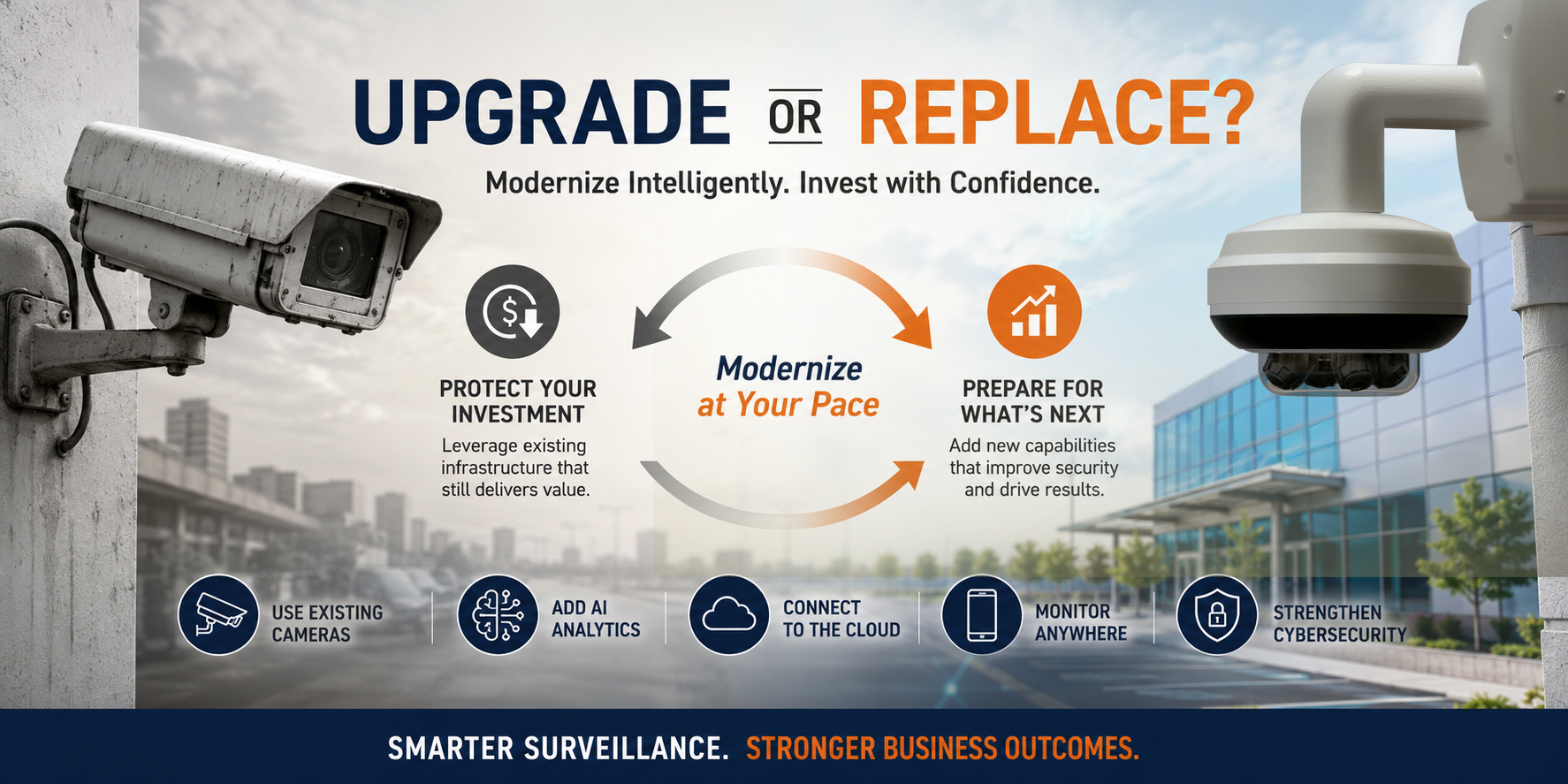



Add to your investment, don't abandon it. |
One of the biggest questions organizations face when evaluating their video surveillance system is whether to upgrade what they already have or start over with an entirely new installation. The answer is rarely as simple as "replace everything." Today's surveillance technology offers significant advances in image quality, artificial intelligence, cloud services, cybersecurity, and business intelligence. But that doesn't necessarily mean your current investment has reached the end of its life. In many cases, the smartest strategy is to modernize selectively while continuing to use the infrastructure that still delivers value. Start by Evaluating What You Already HaveBefore making a purchasing decision, take a close look at your existing system. Ask yourself:
The answers often reveal that some components can continue serving your organization while others should be modernized. When an Upgrade Makes SenseMany organizations don't need a complete replacement. If your network infrastructure is sound, your cameras still produce acceptable images, or your video management software supports modern devices, a phased upgrade can deliver significant improvements while controlling costs. A modern video management platform can often integrate:
This approach allows organizations to add new capabilities without abandoning equipment that still performs well. When Replacement Is the Better InvestmentSometimes, however, replacing older equipment provides the greatest long-term value. Common warning signs include:
An aging surveillance system doesn't just affect security—it can increase operational costs, create liability, and limit your ability to respond to critical incidents. Consider a Hybrid MigrationFor many businesses, the best answer isn't upgrade or replace—it's both. A hybrid migration strategy allows organizations to modernize over time by replacing the areas that deliver the greatest return first, such as:
Meanwhile, a modern video management system can continue managing compatible legacy cameras until they are ready to be replaced. This phased approach minimizes disruption, protects previous investments, and spreads costs over multiple budget cycles. Think Beyond Today's RequirementsVideo surveillance has evolved well beyond recording incidents. Modern systems increasingly support:
Organizations should choose technology that not only solves today's challenges but also provides a foundation for future growth. Questions Every Organization Should AskBefore deciding whether to upgrade or replace your surveillance system, consider:
Answering these questions often makes the right path much clearer. How Digital Watchdog Can HelpDigital Watchdog believes modernization shouldn't require starting from scratch. With DW Spectrum® VSaaS, organizations can often continue using many of their existing cameras while gradually introducing MEGApix® Ai cameras, Blackjack® Ai servers and appliances, other cloud-connected services like myDW® Health Monitoring Service, and advanced AI analytics like Metapix®. This hybrid approach helps organizations maximize existing investments, improve security at their own pace, and build a surveillance system that is ready for future growth. The most successful surveillance projects aren't defined by replacing every component—they're defined by making smart technology investments that deliver measurable value today while creating a flexible foundation for tomorrow. |